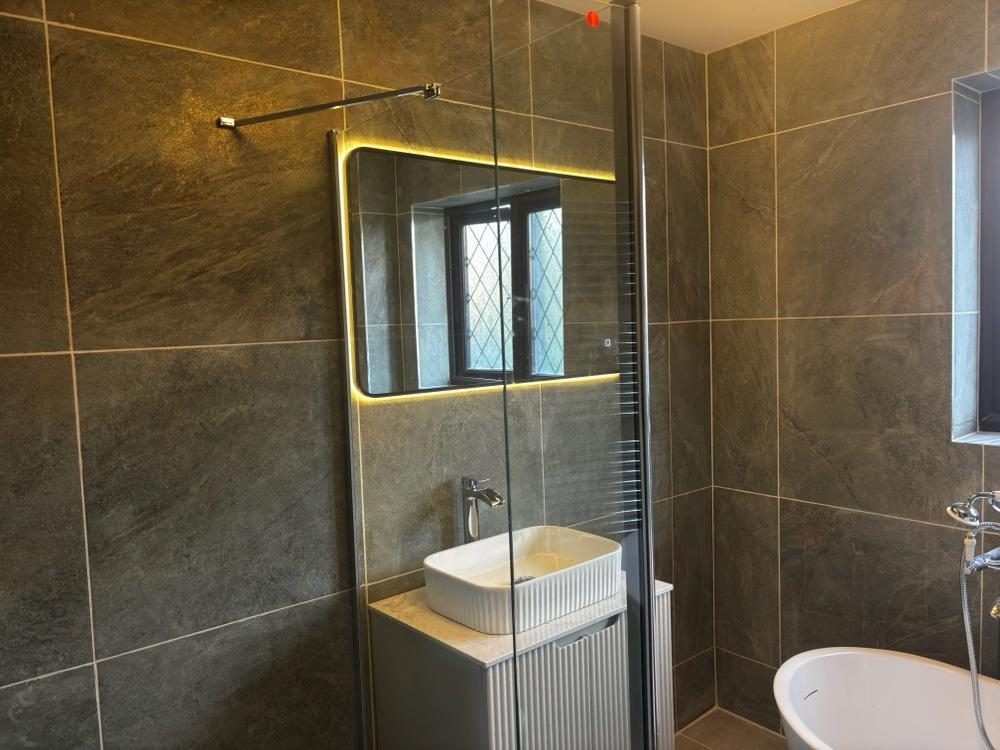
Tiles are the single biggest visual decision in a bathroom — and the one most likely to be regretted. They cover the most surface area, they're the hardest element to change later, and they quietly determine how much cleaning your bathroom will demand for the next decade. Get them right and the room feels considered and calm. Get them wrong and no amount of good fittings will rescue it.
Here's how we talk tile choice through with clients, and the trade-offs worth understanding before you fall for a sample in a showroom.
Porcelain: the dependable default
For most bathrooms, porcelain is the sensible starting point. It's dense, water-resistant almost to the point of being waterproof, and it shrugs off the daily wear that softer materials don't. Modern printing means porcelain can convincingly imitate marble, concrete, slate or timber while behaving far better than any of them in a wet room.
The practical upshot: porcelain asks very little of you. It doesn't need sealing, it resists staining, and it holds its colour. If you want a bathroom that looks intentional but you don't want to think about maintenance, this is usually where we land.
Natural stone: beautiful, but a commitment
Marble, travertine and real slate have a depth that print can't fully replicate — every piece is slightly different, and light moves across them in a way porcelain doesn't quite match. But natural stone is porous. It needs sealing on installation and re-sealing periodically, it can etch if it meets anything acidic, and lighter stones can discolour over years of use.
None of that makes stone a mistake — it makes it a choice with upkeep attached. We'll happily fit it; we just make sure clients know what they're signing up for so the beauty doesn't curdle into frustration.
Large-format and the case for fewer grout lines
One of the biggest shifts in recent bathrooms is scale. Large-format tiles — think 600×1200mm and up — have transformed how finished bathrooms feel, and for good reason:
- Fewer grout lines means a calmer, more seamless wall and far less grout to keep clean.
- A sense of space — big tiles make small bathrooms read as larger, not smaller.
- Less maintenance — grout is the part of a bathroom that ages worst, so less of it is simply better.
The catch is that large-format tiles demand a genuinely flat substrate and skilled setting. They're less forgiving of a rushed job, which is exactly why the quality of the fit matters as much as the tile.
Floors versus walls
It's worth remembering the two surfaces have different jobs. Floor tiles need slip resistance — a rating of R10 or above is a sensible minimum for a bathroom floor, higher in a wet room. Wall tiles have no such constraint, which frees you to use polished or gloss finishes up high where they catch the light, while keeping something more textured underfoot.
The honest summary
If you want low-maintenance and timeless, large-format porcelain in a stone or concrete effect is hard to beat. If you want true material character and you'll accept the upkeep, natural stone rewards you. And whatever you choose, the finished result lives or dies on the standard of the fit — flat substrates, even spacing, clean silicone lines and properly sealed junctions.
That last part is the bit we obsess over. A beautiful tile fitted badly still looks like a bad bathroom.