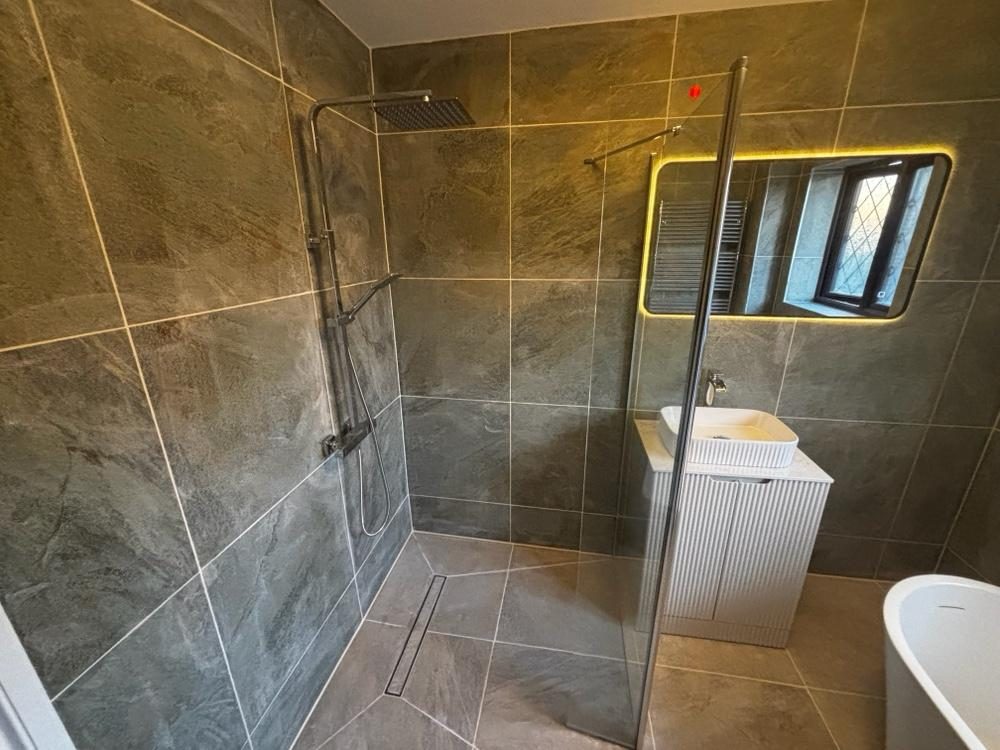
Most of the stress in a bathroom renovation doesn't come from the work itself — it comes from surprises. The unexpected cost, the week that turns into three, the decision sprung on you mid-job when the tiler is standing there waiting for an answer. Almost all of it is avoidable with planning that happens before anyone picks up a tool.
Here's how a well-run renovation actually unfolds, and where homeowners can save themselves the most grief.
Start with how you live, not what you've seen
It's tempting to begin with a photo of a bathroom you love. Useful, but secondary. The better starting point is honest questions about daily life: How many people share this room on a weekday morning? Is a bath actually used, or would a larger shower serve you better? Where does storage need to be so the surfaces stay clear?
A bathroom designed around a photo can look beautiful and work badly. One designed around your routine works every single day.
Get the sequence right
A renovation runs in a fixed order, and understanding it helps you see why timelines are what they are:
- Strip-out — the old suite, tiles and sometimes plaster come out. This is also when hidden problems surface.
- First-fix — plumbing and electrics are moved and run while the walls are open.
- Walls and floor prep — boarding, tanking in wet areas, and getting surfaces dead flat.
- Tiling — usually the longest single stage, and the one that can't be rushed.
- Second-fix — the suite, taps, screen and lighting go in.
- Sealing and finishing — silicone, grout finishing and the details that make it feel complete.
Each stage depends on the one before. That's why a delay on materials early on pushes everything back — and why ordering everything before work starts matters so much.
Budget for the things you can't see
Older London properties in particular tend to hide surprises behind the plaster — perished pipework, previous bodged repairs, uneven walls, or damp that only reveals itself once tiles come off. A sensible renovation budget carries a contingency of around 10–15% for exactly this. It's not pessimism; it's planning. If it isn't needed, wonderful. If it is, you're not derailed.
The questions worth asking any fitter
Before you commit to anyone, these questions tell you a lot about how the job will run:
- Is the quote itemised and fixed, or a rough estimate that can drift?
- Who handles the supporting trades — electrics, plastering — and are they coordinated by one point of contact?
- What's the realistic timeline, and what happens if materials are delayed?
- What does the guarantee cover, and for how long?
Clear answers are a good sign. Vague ones are a warning.
One team, one accountable line
The single biggest reason renovations go sideways is fragmented responsibility — a tiler blaming a plumber blaming an electrician, with you in the middle. The cleanest projects have one team accountable for the whole bathroom, so the trades are sequenced properly and there's no finger-pointing when something needs sorting.
That's how we run ours: clear advice up front, a fixed quote, and one team delivering the whole room. The result isn't just a better bathroom — it's a calmer few weeks getting there.